
At mAdme, we are continuously struck by the level of investment that CSPs make in customer data platforms to better understand and anticipate their customer needs. These platforms do a valuable job pulling information together from different sources so providers can see more of the customer journey in one place. But a lot of the most valuable data they need is still out of reach, especially when it comes to how customers actually use their mobile devices.
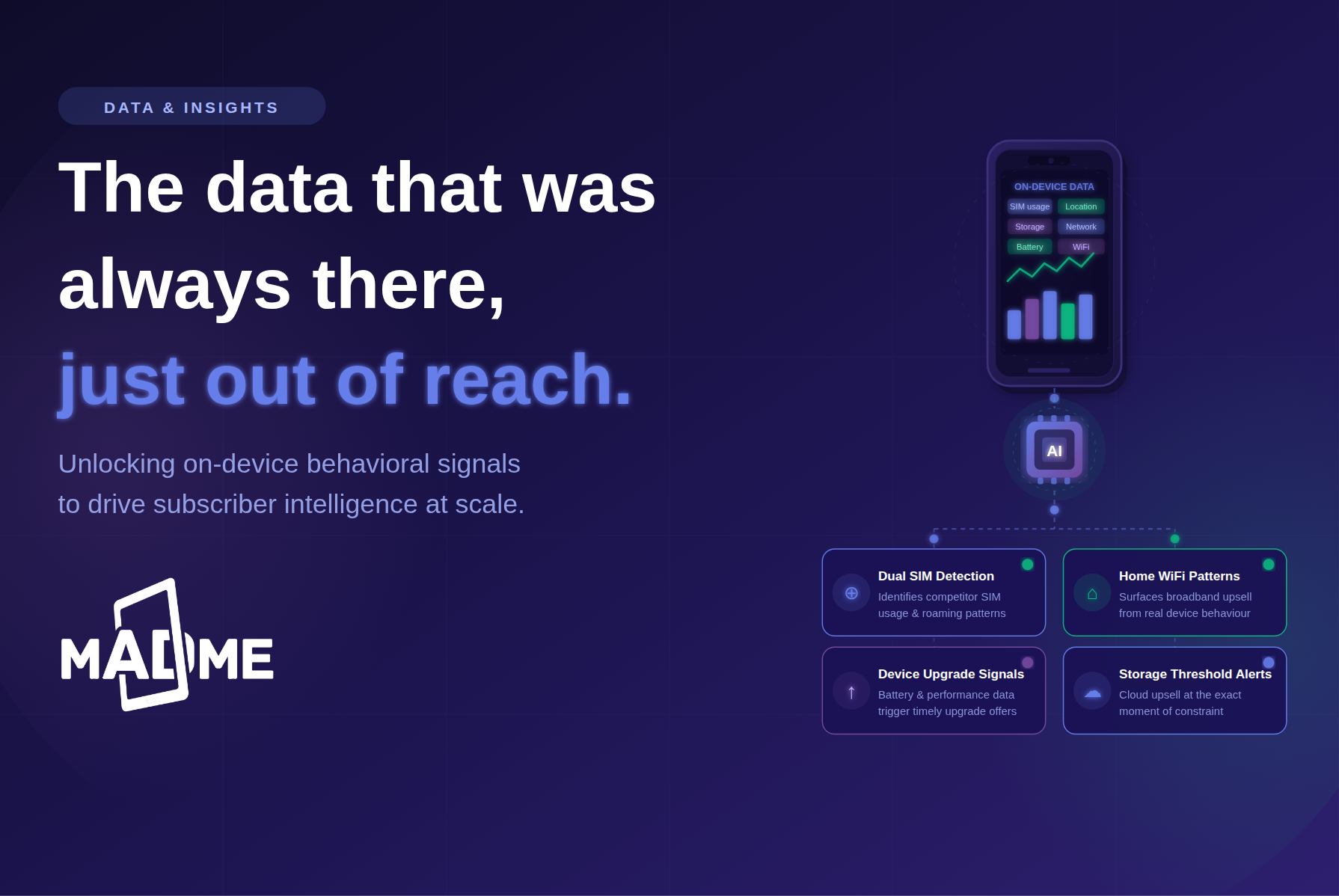
For many service providers, the missing piece is the behavioral data that sits inside the customer’s device. It captures the real moments when customers are using their phone, trying to get something done, running into small points of friction or using competitor services. For many providers today, much of this data is hidden. As a result, they miss the behavior signals that would help them deliver a better experience or open up new revenue opportunities. The gap is not about intent. CSPs want and recognise they need this understanding. The challenge is practical.
For most providers, that challenge has two dimensions. First, they need actual access to the data that shows a complete picture of how customers use their devices all the time, not just the static details like what plan they are on or how much they pay. Second, they need that data in real time so they can act while the moment is still relevant. Insight that arrives too late cannot support an offer or intervention at the point it would have had the greatest impact.
Behavioral data that sits on the device is the key to closing this gap. It holds a rich set of signals that show how customers use services over time, including the amount of data consumed and the type of connection used, whether 4G, 5G, or WiFi. It also captures how location patterns shift, how often the device is picked up, and how much storage has been used or remains available. None of these signals are dramatic on their own. Each represents a small moment of behavior, but together they build a far clearer picture of how the entire customer base experiences the provider's services.
When CSPs unlock this on-device behavioral data and aggregate it at scale, they can develop powerful insights that are genuinely transformative. In one recent example, a provider we worked with used on-device data to build a clear picture of dual SIM usage. By combining information from SIM card slots with voice, text, and internet activity captured directly from the device, we enabled them see how many of their subscribers were using competitor SIM cards and what they were using them for. This revealed which competitor networks were most popular across different segmentsand the countries that drove the most roaming activity. This was not interesting analysis for its own sake. However, it enabled targeted campaigns to defined customer segments, promoting a roaming package aligned to the specific destinations and real usage patterns visible in the on-device data.
The same principle applies in the home. When providers aggregate on-device signals showing when customers are connected to home WiFi and how much data they consume there, they can identify a segment whose behavior suggests that a home broadband add-on would be relevant. Rather than promoting broad, generic offers, the CSP can put forward an option that clearly reflects what these customers are already doing on their devices at home, resulting in higher conversions and a better customer experience.
On-device behavior also highlights when the device itself is becoming a constraint. Patterns that show poor battery performance or frequent charging allow providers to identify customers who are naturally suited to an upgrade conversation. When this information is combined with details about the devices customers currently use, the resulting offer can be tailored further by matching or complementing device type and brand. The upgrade becomes timely and relevant, not random.
Storage is another example where on-device data creates real opportunity. By capturing how much storage customers have used and identifying those who are close to their limits, CSPs can form a segment that is well suited to an enhanced cloud storage offer. For these customers, the value is obvious, because the offer arrives at the point it removes a real constraint.
Used in this way, on-device behavioral data stops being a hidden asset and becomes a foundational part of how providers shape customer experience and revenue growth. CSPs who already use insights like these have a clear advantage in driving future growth and retention. They are working with a more complete picture of their customers and acting at moments when customers are most open to change.
At mAdme, we work with service providers every day to unlock this on-device behavioral data in real time and turn it into insights like those described here. Our platform collects the relevant data from the device, transforms it into a clear set of signals providers can act on, and supports meaningful next best actions that improve customer experience and open new revenue opportunities. It meets the strictest privacy and compliance requirements and gives CSPs a practical way to use on-device behavior as a core input to how they understand, serve, and grow their customer base.